

Isla’s Point of View
After breakfast, I wandered outside with coffee to stretch my legs.
The kitchen opened onto a wide stone terrace that wrapped around the villa, the morning already warm and bright. I drifted along the edge of it, watching Etna over the tops of lemon trees, letting the view slide past me as I moved until I reached the front of the house.
When I turned back toward the front door, something hanging from the iron handle caught my eye.
Two birds, strung from the handle by a length of twine, neat as a butcher’s display, their rust-and-cream feathers still glossy in the morning light. I stopped and stared at them for a moment, then looked left and right along the terrace as though the person responsible might still be standing there, waiting to be thanked or arrested.
Nobody.
I picked up the string with two fingers and carried them inside at arm’s length. Figaro was through the door before I was.
Valentina was at the marble kitchen island, her sleeves already rolled, a copper bowl in front of her. She looked up, clocked the birds, and her face opened into something close to delight.
“Ah.”
She set down the bowl and crossed to me.
“Sicilian Rock Partridge.”
She lifted them from my fingers with no hesitation, turning them to examine the plumage with the eye of someone who knew exactly what she was looking at. Her whole expression softened into the particular glow of a cook already composing the dish.
“Beautiful. Both of them.”
“What were they doing on the door handle?”
“A gift.”
“For whom?”
She considered this with theatrical fairness.
“Could be any of us.”
She glanced down. Figaro had positioned himself directly beneath the birds, his neck extended, ears pricked, the picture of focused optimism.
“Figaro seems to think they are his.”
“Don’t we owe someone money?”
Valentina looked at me. Then she laughed — the low, woodsmoke laugh — and turned to hang the birds from a hook near the window. Halfway there, she stopped and turned back. Something in my expression had caught, and her face shifted to something mildly apologetic.
She pulled out a stool from beneath the island and sat down, settling in the way someone does when they’ve decided something needs explaining properly.
“You understand what these are, Isla?”
“Game birds. You said—”
“Not just game birds. The Sicilian Rock Partridge exists nowhere else on earth. It is hunted here under strict license, by people who know the land well enough to be trusted with it. You will not find them in any market, at any price. The person who left these had the skill to hunt them and the license to take them, and they gave us both birds.”
She paused.
“That is not a small thing.”
I looked at the birds hanging by the window. Figaro had repositioned himself directly below them, methodically, like a man choosing his seat at the theater.
“So what did we do to deserve it?”
“That is a different question.”
She folded her arms.
“Here, people trade — or sometimes they simply offer a gift because someone did something kind. A fisherman falls sick. Someone else goes out to pull his pots. Two days later, the person who helped finds two lobsters on their kitchen table.”
“How did the lobsters get inside?”
She looked at me with an expression that was almost fond.
“We don’t lock doors here, Isla.”
I opened my mouth, then closed it. Four years in Chicago, I had double-locked every door every night, chain on. I tried to locate the version of myself that would leave a front door unlatched and couldn’t quite reach her.
“All right.”
I pulled out the stool opposite and sat down.
“So, what did we do?”
Valentina picked up the birds again, weighing them in her hands, tilting her head. A slow smile arrived.
“The Primofiore harvest starts next week. Half the village has been watching the groves.”
“Someone wants lemons?”
She set one bird down, examined the other.
“Or possibly...”
She looked up and grinned mischievously.
“Someone enjoyed watching your ass on a run and decided it was worth a hearty meal.”
She said it with the serenity of a woman announcing the weather.
“Hilarious.”
“I am being serious. Sicilian men are passionate — women too. It might not have been an admiring man.”
Figaro chose this moment to attempt a vertical leap that fell several inches short of the hanging birds. He landed, recalibrated, and sat down with great dignity.
Valentina turned back to her copper bowl.
“I’ll make a sugo. With juniper, wild thyme, and a little red wine. Slow cook for at least an hour. We’ll eat well tonight.”
She said we without thinking about it.
I noticed.
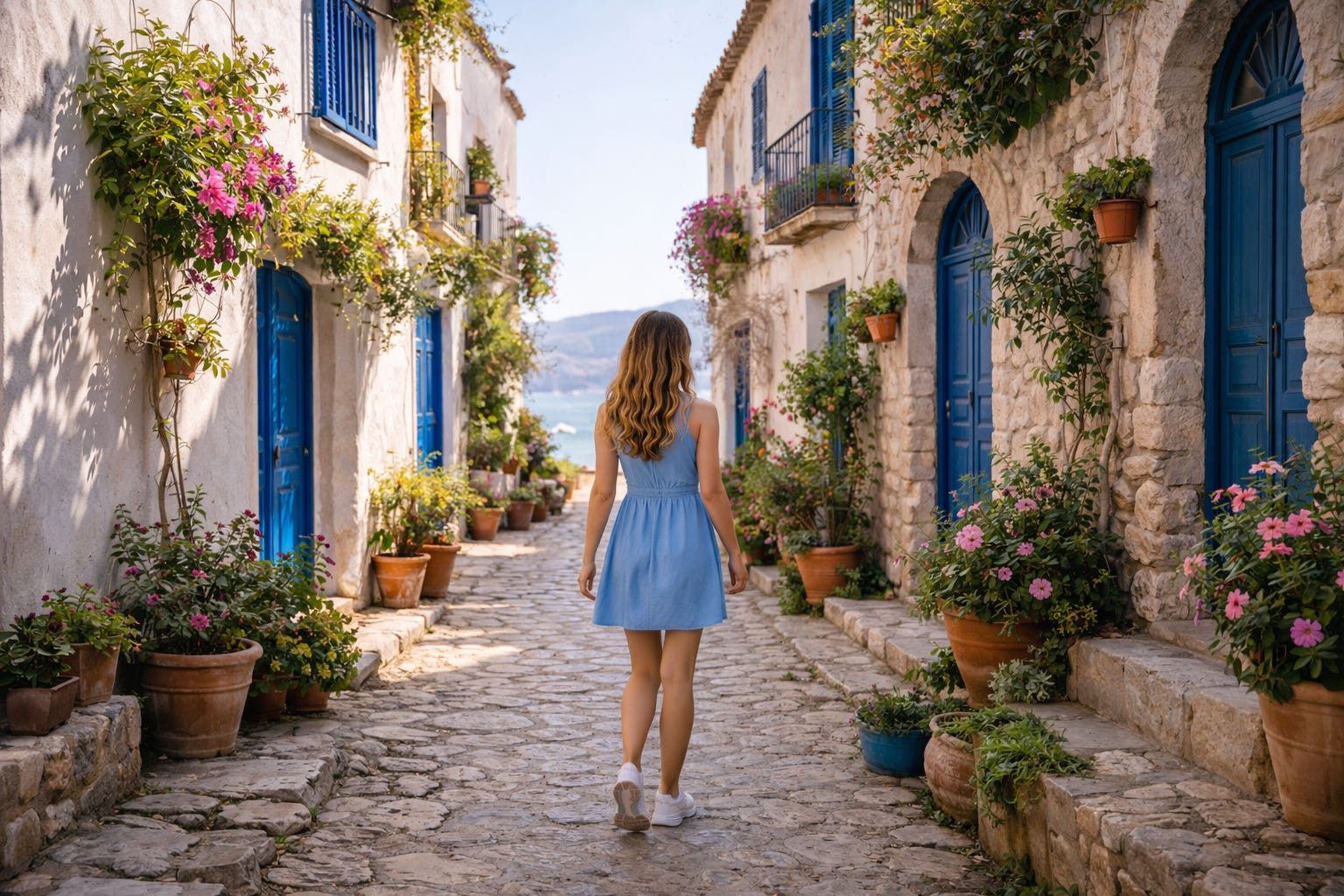
The mystery of the partridge stayed with me as I strolled along the rough path I had climbed from the harbor on arrival. I made a mental note to buy more sundresses. I had four, and even though Sicily had its differences, I figured that unless I rotated through an extensive wardrobe of appropriate clothes, I would be discussed.
On this occasion, I slipped on running shoes and carried two-inch heels, wearing a simple blue sundress that might be worn to cocktails at a hotel realtor’s presentation or to hang washing on a line.
Washing.
I’d seen the washing billowing on clotheslines outside the back of the villa as I left. Brilliant white sheets like sails in a light breeze, their edges almost reaching the nearest lemon trees.
“That’s it!”
I stopped, turned, and looked back, but only the villa roof was visible, its terracotta tiles warm and inviting. I realized the smell on my bed linen was lemon and, for reasons I’d rather not process, it amazed me. This was a seismic shift from scented dryer sheets in Chicago.
“What is it?”
I turned and saw an old lady sitting under a tree — my tree — full of lemons.
“Are you okay?”
“I am enjoying the view. On my way to your villa.”
“Do you need help?”
“I am not infirm, young lady. I choose to rest here, under this tree, where I first met my husband.”
She stared up into the branches and smiled.
“His spirit is here, still begging for a first kiss.”
“I’m sorry for your loss.”
“My husband died six years, five months, two weeks, and one day ago. He lives on, here.”
She pressed her right palm to her left breast.
“And there.”
She pointed to the village roofs.
“And in your Taverna.”
“That’s sweet.”
She tilted her head and smiled in that way old people smile when a younger person is discovering something new that, to them, was very old.
She pointed down the track.
“Don’t keep Matteo waiting, Isla Harper.”
I smiled and nodded. Of course, she knew. I bid her a good day and strolled on toward the village, a rough map of it in my head.
The path narrowed as it descended, stone steps giving way to uneven cobbles worn concave by centuries of footsteps. I walked slowly, letting the morning unfold around me. The air carried the mingled scents of woodsmoke, fresh bread, and the ever-present salt from the harbor far below.
As I entered the village, whitewashed houses rose on either side, their shutters painted in faded blues and greens, bougainvillea spilling over walls in violent pinks and magentas that caught the early sun like spilled paint. Laundry hung from wrought-iron balconies — sheets and shirts and small children’s dresses flapping gently like flags of everyday life. A woman appeared at an upper window, pegging out a towel; she paused, saw me, and raised a hand in quiet greeting. I waved back, feeling strangely seen — not as the new American, but as someone passing through a shared morning.
The lane opened into the main piazza, small and sun-drenched, ringed by cafés with metal tables already set out. An old man sat under an awning playing dominoes with himself, moving pieces with deliberate care. A group of children chased a football across the stones, their shouts bright and sharp. The church stood at one end, its bell tower plain and solid, the clock face stopped at twenty past eleven — perhaps forever.
I knew Matteo’s office was above the bakery. Everyone had said so. But the bakery itself proved elusive. I circled the square twice, past the tabaccheria with its lottery posters, past a tiny alimentari where lemons and tomatoes were stacked in wooden crates like treasure, past the fountain where water trickled from a lion’s mouth worn smooth by time. No sign announced Panificio or Forno. Only the smell — warm yeast, sesame, sugar — drifting from narrow alleys, teasing me first one way, then another.
I turned down a side street that looked promising — more houses, more laundry, a tabby cat washing its paws on a doorstep — but after fifty paces it dead-ended at a locked wooden gate overgrown with jasmine. I backtracked, my cheeks warming with mild embarrassment. The village was small. How could I be lost?
That was when I nearly walked straight into him.
A young man — my age, perhaps a year or two younger — stepped out from a shadowed doorway carrying a flat cardboard tray of cannoli dusted with powdered sugar. Dark hair, sun-bleached at the tips, curled loosely over his forehead. He had eyes the color of strong espresso, framed by lashes long enough to notice. He wore a faded linen shirt open at the throat, sleeves rolled, and the easy confidence of someone who belonged exactly where he stood.
We both stopped short.
“Scusi.”
I apologized quickly, stepping back, keen not to repeat my Nico encounter.
He tilted his head, amused, a smile arriving slowly.
“Isla Harper.”
He said my name like he’d been expecting to use it.
I blinked.
“You know me?”
“Everyone knows you.”
“This is getting weird.”
He balanced the tray on one hand with casual skill.
“New blood in the village. Agatha’s American girl. The one who runs through the groves at dawn and collects partridge like mail.”
Heat climbed my face again. I was utterly stunned.
“Are you impressed, Isla?”
“Deeply.”
“Word travels fast.”
“Faster than light, it seems.”
He studied me for a moment, unhurried.
“You’re looking for Matteo Russo?”
“Yes. His office is supposed to be above the bakery, but—”
He laughed — soft, genuine, the sound rolling low in his chest.
“You won’t find a sign. The bakery doesn’t need one. Everyone closes their eyes and follows the smell.”
I glanced around, my embarrassment piquing.
“Apparently not everyone.”
He considered me, then shook his head with mock solemnity.
“I could tell you. Left at the fountain, up the stairs beside the green door, second left after the fig tree. But where’s the fun in that?”
“Are those directions correct?”
“No. We have no green doors.”
I raised an eyebrow.
“You’re refusing to give directions?”
“Exactly.”
He stepped closer, lowering his voice conspiratorially.
“Follow your nose, Isla Harper. I’ll follow closely behind and direct you if you go wrong.”
“That’s ridiculous.”
“Sì. But it is an effective way to learn.”
He gestured with the cannoli tray.
“After you.”
I hesitated, then laughed despite myself — a small, surprised sound — and started walking. He fell into step a respectful three paces back, humming something under his breath.
I followed the scent of bread: warm, yeasty, edged with vanilla and toasted almond. It pulled me left past a doorway hung with drying herbs, then right down an alley where geraniums spilled red over steps. The smell grew stronger — now cinnamon, now sesame seeds popping in hot oil. I turned once more, almost by instinct, and there it was: a low stone archway, no sign, just an open door and a rush of heat carrying the full perfume of fresh baking.
Above the doorway, a narrow external staircase climbed to a small balcony with iron railings. A brass plaque the size of a postcard read simply: Studio Legale Russo.
I turned to my guide and smiled like I had just won a sprint race at school.
“You win. I followed my nose.”
He bowed slightly, theatrical.
“Grazie. My work here is done.”
He offered me the tray.
“One cannoli for the road? Fresh this morning.”
I took one — still warm, its shell crisp, ricotta filling creamy and flecked with candied orange peel. The first bite was sweet-sharp perfection.
“Thank you. I didn’t catch your name.”
He smiled — quick, bright, already turning to go.
“I am Luca’s uncle. Sofia’s brother. Call me Enzo.”
He disappeared back down the alley before I could ask anything else, leaving only the echo of his footsteps and the faint dusting of powdered sugar on my fingers.
I brushed my hands together, licked the sweetness from my thumb, and climbed the stairs to Matteo’s office.
The door at the top stood ajar.
I knocked once, lightly, and pushed it open.
Matteo’s outer office smelled of old paper, fresh espresso, and the faint sweet dust of sun-warmed wood. A single tall window let in a slanted rectangle of morning light that caught motes drifting lazily above the worn Persian rug. Three wooden chairs stood against the wall opposite the desk, and behind an oak counter sat a woman who looked as though she had been born to occupy exactly that spot.
She was perhaps seventy, silver hair swept into an elegant chignon, skin the color of burnished olive, eyes dark and kind behind half-moon reading glasses perched on the bridge of her nose. Her blouse was cream silk, fastened at the throat with a cameo brooch shaped like a pomegranate. She rose when I entered — not quickly, but with the calm authority of someone who had seen every variety of visitor and remained unruffled by all of them.
“Signorina Harper.”
Her voice was low and musical, the accent rolling the r softly.
“Matteo is expecting you. Prego, sit. He is finishing with another matter, then this couple.”
She gestured toward the three chairs. Two were already occupied by the couple who had left the middle chair free. They were in their late fifties — the man broad-shouldered, with salt-and-pepper hair, wearing a pressed short-sleeved shirt the color of faded sky, a large wire cage balanced on his lap. Inside it, a scarlet-and-green parrot regarded the room with bright, intelligent eyes, its head cocked at an angle that suggested it understood far more than it let on. The woman was smaller, fidgety, with dark curls streaked with gray, her hands clasped tightly in her lap as though holding something back.
I offered them a small smile and took the empty chair between them. The parrot tilted its head toward me, gave a single soft cluck, then returned to preening.
The receptionist — her nameplate read Signora Elena — returned to her ledger, pen moving in neat, economical strokes. For several minutes, the only sounds were the scratch of that pen, the occasional rustle of the parrot shifting on its perch, and the low murmur of voices behind the half-open door to Matteo’s inner office.
Then their name was called. Elena looked at the couple and nodded toward the open door. Both stood and disappeared inside.
Then the voices rose.
Not shouting — Sicilians, I was learning, rarely shouted in public — but sharp, insistent, overlapping in the way long-married people do when they have rehearsed the same argument so many times it has worn its own grooves.
“Non è sano, Giovanni! Il pappagallo non è fatto per mangiare pane e mortadella!”
“Maria, è un uccello, non un bambino. Ha fame, guarda come mangia!”
“Ha mangiato tre fette ieri! Tre! E poi ha vomitato sul tappeto nuovo della zia Rosa!”
“Perché tu gli hai dato troppo formaggio la volta prima!”
My limited Italian collapsed. The parrot, apparently recognizing its cue, let out a loud, theatrical squawk that sounded suspiciously like “Mortadella!”
I pressed my lips together to keep from laughing. Signora Elena did not look up, but the faintest curve appeared at the corner of her mouth.
The argument continued, passionate but contained, until Matteo’s voice — calm, measured, carrying the same quiet authority I remembered from the Taverna — cut through.
“Giovanni. Maria. Basta. Ascoltatemi.”
I understood that much: Enough. Listen to me.
Silence followed, then softer murmurs, then the scrape of chairs. A few moments later, the couple emerged, faces flushed but no longer angry. Giovanni carried the cage in one hand; with the other, he reached for Maria’s fingers. She let him take them. They paused at the counter.
Signora Elena raised an elegant eyebrow.
“E allora?”
Her tone was light, almost playful.
Maria smiled, a little sheepish.
“Semi di girasole. Solo semi di girasole e un po’ di mela la mattina. Niente più mortadella.”
Giovanni sighed theatrically but squeezed his wife’s hand.
“Grazie, Elena. E grazie a Matteo.”
They left together, the parrot giving a final, satisfied “Arrivederci!” as the outer door closed behind them.
I turned to Signora Elena.
“May I ask… what was that about?”
She set her pen down, folded her hands on the ledger, and regarded me with the patient indulgence of a teacher explaining something obvious to a bright but foreign pupil.
“Matteo is not only advocate here. He is also giudice di pace informale — how do you say? — peace judge, counselor, sometimes confessor. When people in the village quarrel and do not want the Carabinieri or the tribunal in Palermo, they come here. Matteo listens, and he suggests. Most times they leave friends again.”
“And the parrot?”
She allowed herself a small, fond smile.
“Giovanni loves that bird more than his own shadow, but he feeds it too much bread and mortadella. Maria loves Giovanni more than the bird, but she worries it will die of indigestion before its time, making her husband unhappy. They have argued this point for three months. Today, Matteo suggested a simple diet — sunflower seeds, apple slices, fresh water — and a promise from Giovanni to stop sneaking table scraps. They agreed. You saw them leave holding hands.”
I glanced toward the now-quiet inner office.
“As easy as that?”
“When people love each other… yes, it is easy.”
“Why was the door left open?”
Signora Elena leaned forward slightly, her voice dropping as though sharing a village proverb.
“Closed doors do not keep secrets in this place, Signorina Harper. Everyone would know they were here anyway — someone would have seen them climb the stairs, someone would have heard the parrot squawking halfway down the alley. Better the door stays open. Better the village hears the truth spoken calmly than whispers invented later in the caffè. Transparency is the only way to keep peace.”
I nodded slowly, turning the idea over. In Chicago, privacy was currency. Here, it seemed suspicion was the greater sin.
Signora Elena rose, smoothed her skirt, and gestured toward the open door.
“Matteo is ready for you now, Signorina Harper. Prego.”
I stood, smoothing my sundress, suddenly aware of the powdered sugar still clinging faintly to my fingertips from Enzo’s cannolo.
“Thank you, Signora Elena.”
She inclined her head, the cameo at her throat catching the light.
“Benvenuta a casa.”
She spoke softly: Welcome home.
I stepped through the doorway into Matteo’s office, heart beating a little faster than the stairs warranted.
Next Chapter:

Great chapter. Took us further into Sicilian village life and love. Beautiful. A gift and an explanation, then a walk through the groves, meeting folks, and a walk into town. Becoming a citizen. Thank you, Kate. An entire conversation in Sicilian Italian. Allowing us to participate. So far, this could have been under the Emma nom.
Have a good evening. ❤️❤️❤️❤️❤️❤️
Having grown up in a small village on the North Yorkshire moors this village resonates with me everybody new everybody else and strangers were so obvious, also back in the 1950’s doors were never locked this chapter took me straight back there💖💖💖💖💖